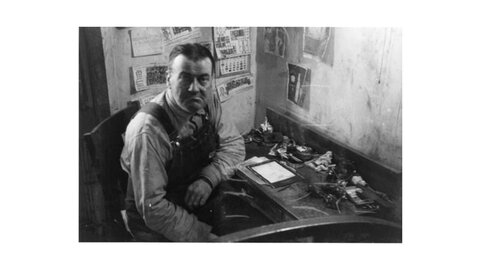
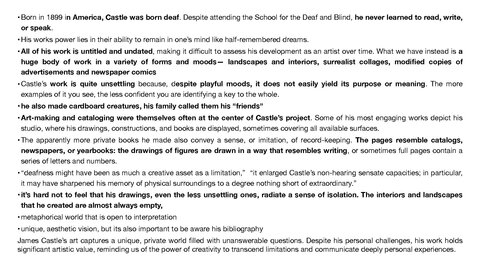
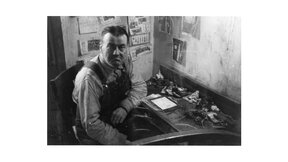
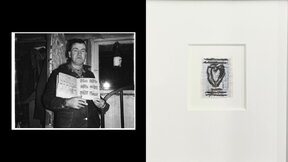
Born in 1899 in America, Castle was born deaf. Despite attending the School for the Deaf and Blind, he never learned to read, write, or speak.
His works power lies in their ability to remain in one’s mind like half-remembered dreams.
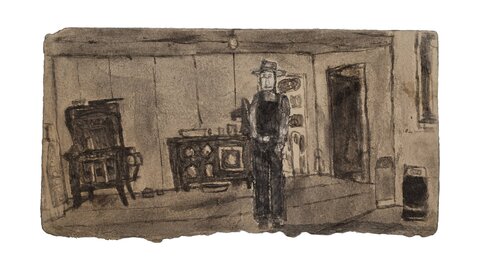
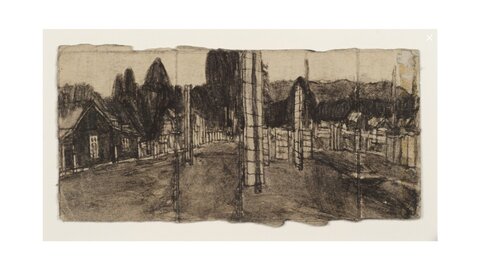
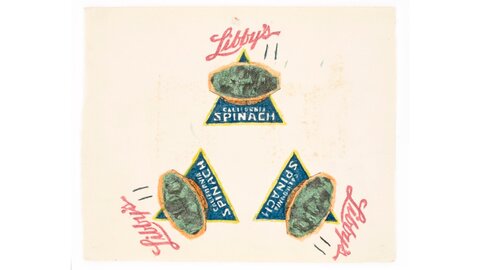
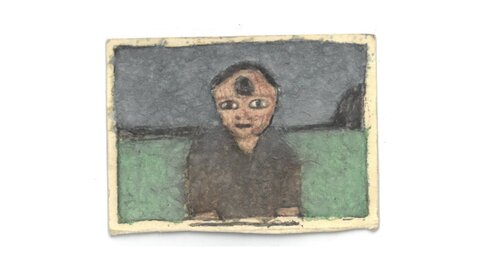
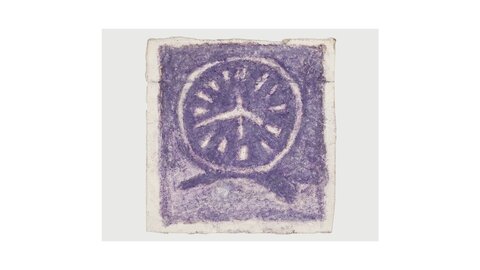
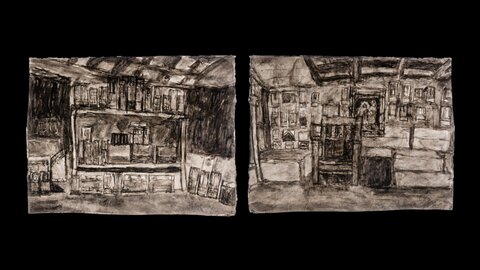
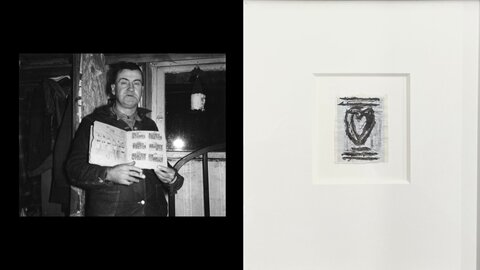
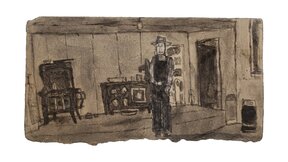
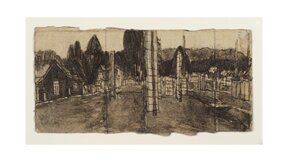
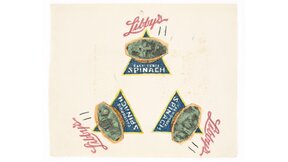
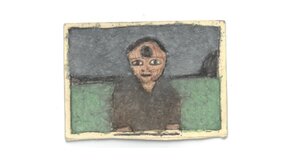
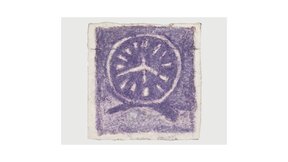
All of his work is untitled and undated, making it difficult to assess his development as an artist over time. What we have instead is a huge body of work in a variety of forms and moods— landscapes and interiors, surrealist collages, modified copies of advertisements and newspaper comics
Castle’s work is quite unsettling because, despite playful moods, it does not easily yield its purpose or meaning. The more examples of it you see, the less confident you are identifying a key to the whole.
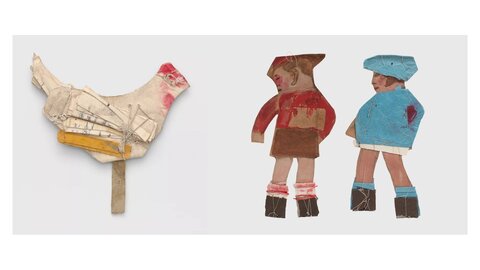
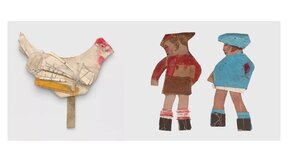
he also made cardboard creatures, his family called them his “friends”
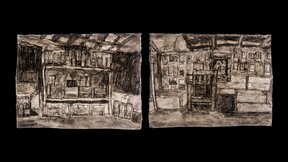
Art-making and cataloging were themselves often at the center of Castle’s project. Some of his most engaging works depict his studio, where his drawings, constructions, and books are displayed, sometimes covering all available surfaces.
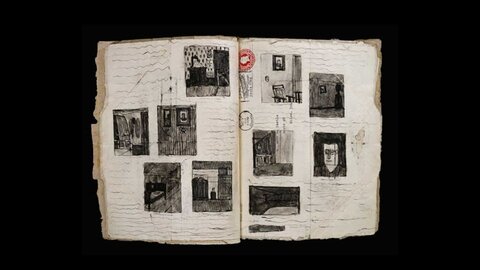
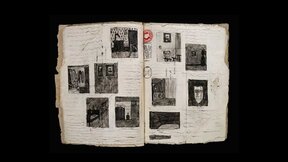
The apparently more private books he made also convey a sense, or imitation, of record-keeping. The pages resemble catalogs, newspapers, or yearbooks: the drawings of figures are drawn in a way that resembles writing, or sometimes full pages contain a series of letters and numbers.
…