Author:
Evaluation:
Published: 02.02.2012.
Language: English
Level: Elementary school
Literature: n/a
References: Not used
  • Presentations 'Bricks. Methods of Manufacture', 1.
  • Presentations 'Bricks. Methods of Manufacture', 2.
  • Presentations 'Bricks. Methods of Manufacture', 3.
  • Presentations 'Bricks. Methods of Manufacture', 4.
  • Presentations 'Bricks. Methods of Manufacture', 5.
  • Presentations 'Bricks. Methods of Manufacture', 6.
  • Presentations 'Bricks. Methods of Manufacture', 7.
  • Presentations 'Bricks. Methods of Manufacture', 8.
Extract

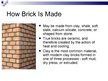
May be made from clay, shale, soft slate, calcium silicate, concrete, or shaped from stone.
True bricks are ceramic, and therefore created by the action of heat and cooling.
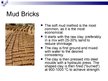
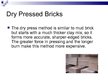
Clay is the most common material, with modern clay bricks formed in one of three processes - soft mud, dry press, or extruded.

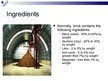
Normally, brick contains the following ingredients:
Silica (sand) - 50% to 60% by weight
Alumina (clay) - 20% to 30% by weight
Lime - 2 to 5% by weight
Iron oxide - 5 to 6% (not greater than 7%) by weight
Magnesia - less than 1% by weight.…

Author's comment
Atlants