Author:
Evaluation:
Published: 04.09.2025.
Language: English
Level: College/University
Literature: n/a
References: Not used
Time period viewed: 2021 - 2025 years
  • Essays 'Is Organic Food Better than Non-Organic? A Critical Exploration of Health, Envir', 1.
  • Essays 'Is Organic Food Better than Non-Organic? A Critical Exploration of Health, Envir', 2.
  • Essays 'Is Organic Food Better than Non-Organic? A Critical Exploration of Health, Envir', 3.
  • Essays 'Is Organic Food Better than Non-Organic? A Critical Exploration of Health, Envir', 4.
  • Essays 'Is Organic Food Better than Non-Organic? A Critical Exploration of Health, Envir', 5.
  • Essays 'Is Organic Food Better than Non-Organic? A Critical Exploration of Health, Envir', 6.
  • Essays 'Is Organic Food Better than Non-Organic? A Critical Exploration of Health, Envir', 7.
  • Essays 'Is Organic Food Better than Non-Organic? A Critical Exploration of Health, Envir', 8.
  • Essays 'Is Organic Food Better than Non-Organic? A Critical Exploration of Health, Envir', 9.
  • Essays 'Is Organic Food Better than Non-Organic? A Critical Exploration of Health, Envir', 10.
  • Essays 'Is Organic Food Better than Non-Organic? A Critical Exploration of Health, Envir', 11.
Extract

Introduction
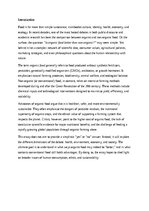
Food is far more than simple sustenance; it embodies culture, identity, health, economy, and ecology. In recent decades, one of the most heated debates in both public discourse and academic research has been the comparison between organic and non-organic food. On the surface, the question “Is organic food better than non-organic?” may seem simple. Yet behind it lies a complex network of scientific data, consumer values, agricultural policies, marketing strategies, and even philosophical questions about the human relationship with nature.
The term organic food generally refers to food produced without synthetic fertilizers, pesticides, genetically modified organisms (GMOs), antibiotics, or growth hormones. It emphasizes natural farming processes, biodiversity, animal welfare, and ecological balance. Non-organic (or conventional) food, in contrast, relies on intensive farming methods developed during and after the Green Revolution of the 20th century. These methods include chemical inputs and technological interventions designed to maximize yield, efficiency, and scalability.

Author's comment
Atlants